

Sodium benzoate, also known as benzoic acid sodium, is commonly used as food preservatives in food industry, odorless or with slight smell of benzoin, and tastes sweet astringency. Stable in air, can absorb moisture in open air. It’s naturally found in blueberry, apple, plum, cranberry, prunes, cinnamon and cloves, with weaker antiseptic performance than benzoic acid. Antiseptic performance of 1.180g sodium benzoate is equivalent of about 1g benzoic acid. In acidic environment, sodium benzoate have obvious inhibitory effect on a variety of microorganisms: when pH is at 3.5, 0.05% solution can completely inhibit the growth of yeast; while when pH is above 5.5, it has poor effect on a lot of mold and yeast; hardly has any effect in alkaline solution. After sodium benzoate enters into the body, in the process of biotransformation, it would combine with glycine to be uric acid, or combine with glucuronic acid to be glucosiduronic acid, and all to be eliminated from the body in urine, not to accumulate in the body. As long as it is within the scope of the normal dosage, it would be harmless to the human body, and it is a safe preservatives. It also can be used for carbonated beverages, concentrated juice, margarine, chewing gum base, jam, jelly, soy sauce, etc. Human acceptable daily intake (ADI) < 5 mg/kg body weight (take benzoic acid as calculation basis).
|
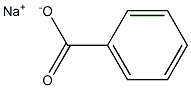
Synonyms: SODIUM BENZOATE;PUROX S;femanumber3025;sobenate;sodiumbenzoate,medicinal;sodiumbenzoicacid;ucephan;BENZOTRON(R) CAS: 532-32-1 MF: C7H5NaO2 MW: 144.10317 EINECS: 208-534-8 Product Categories: Food & Feed ADDITIVES;Food and Feed Additive;FOOD ADDITIVES;Food & Flavor Additives;Building Blocks;Fine chemicals;Carbonyl Compounds;Carboxylic Acid Salts;Chemical Synthesis;Organic Building Blocks;Food additive;bc0001;532-32-1 Mol File: 532-32-1.mol Sodium benzoate Structure |
|
|
|